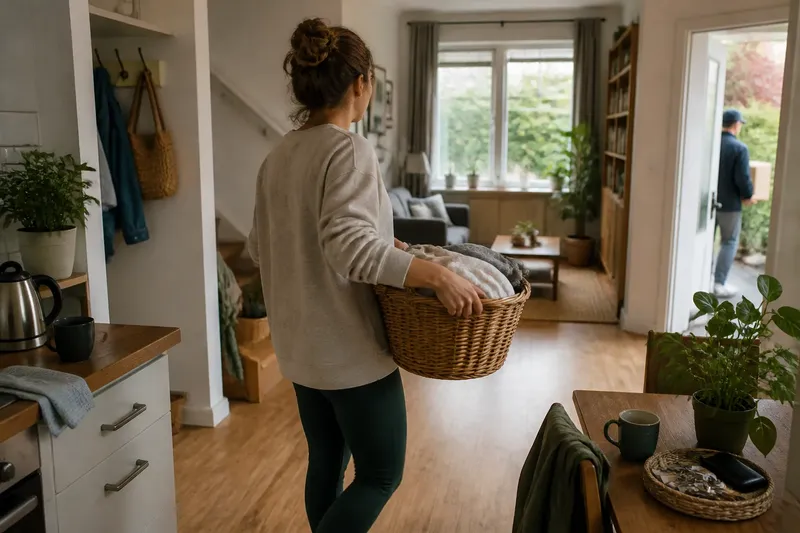
Why a Clear Patch of Floor Changes What a Room Can Do
A clear patch of floor gives a busy room room to adapt for stretching, play, or daily changes without a full furniture rearrangement.
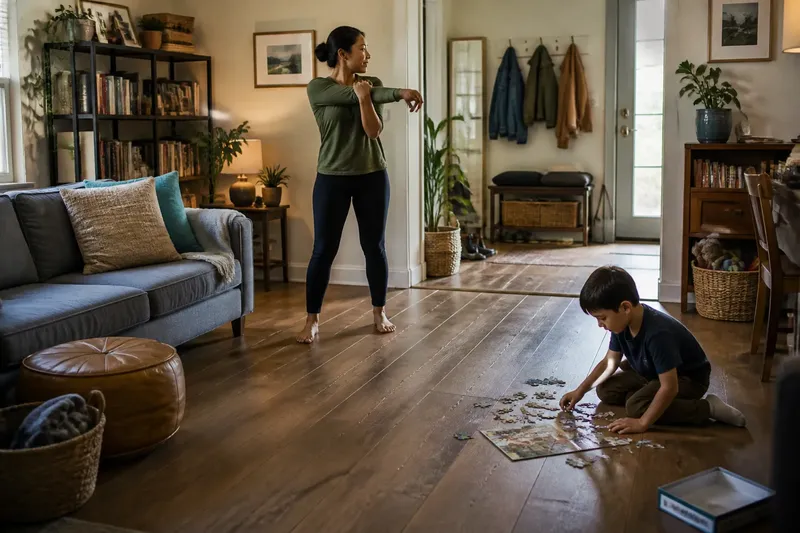
The common mistake is treating every open patch of floor as wasted space, then filling it with a basket, side table, or chair that has nowhere else to go. A clear patch of floor can change what a room can do: it gives ordinary moments—sorting laundry, waiting for dinner, or taking a quick stretch—a place to happen without first rearranging the whole room.
What makes an open patch useful?
It does not need to look like a designated exercise zone. A useful patch is simply a piece of floor that stays available for more than one purpose. Its value comes from being ready: someone can sit down to put on shoes, a child can spread out a puzzle, or a family member can move a stiff back after a long spell at a desk.
Think of it like a clear kitchen counter. You may use that counter for several jobs, but it cannot help if the mail, shopping bags, and appliance parts occupy every inch. An open patch works the same way, except it supports movement and floor-level tasks rather than meal preparation.
Choose a spot that already belongs to the room’s natural traffic rather than carving out an isolated corner. The area beside a sofa may suit a living room; a space near the entry may work better for shoes and bags. A patch that is easy to see and reach is more likely to be used than one hidden behind a dining table.
Where can it fit without disrupting the room?
Start by watching how people actually cross the room. A clear area should not sit in the middle of a route between a doorway and the kitchen, or block access to a frequently used cabinet. The goal is not to create a bare runway. It is to leave a modest, usable opening beside the room’s regular paths.
In a living room, consider the space between the sofa and a bookcase if people do not need to pass through it. In a bedroom, the foot of the bed may work when drawers and closet doors remain accessible. In a shared dining area, one end of the table can stay open if chairs still pull out comfortably.
Do not assume that the largest empty area is the best one. A smaller spot with a dependable place in the room’s rhythm can be more useful than an expansive area that gets crossed, covered, or treated as a storage landing. The furniture should make the patch feel connected to the room, not fenced off from it.
What should stay out of the way?
Small objects often claim floor space one at a time: a tote bag, a charging cord, a footstool, a stack of folded clothes. Each seems harmless, but together they turn an adaptable patch into an obstacle course. Give recurring items a nearby home—a hook for the tote, a basket for soft toys, or a tray on a shelf for chargers—so clearing the floor does not become a daily hunt.
Look especially at movable furniture that drifts. Dining chairs, rolling office chairs, and lightweight stools can migrate into a useful opening after a meal or a call. If a piece is used often, decide where it returns when the task is over. A chair that slides under the table is less likely to occupy the floor by default.
For cords, rugs, and other items that could catch a foot, follow the product instructions and local safety guidance where relevant. The practical aim is a surface that feels predictable underfoot, not an elaborate setup or a new set of household rules.
How can the patch serve different daily needs?
Keep the area visually neutral and avoid assigning it one permanent job. A mat or storage bin can signal that the space belongs to a particular activity; useful as those items may be, they can also make the patch feel unavailable for anything else. If a soft surface helps, choose one that can be moved aside and stored close by.
Say you have a living room where a small ottoman regularly lands in front of the sofa. Move it beside the wall and leave the floor clear there. After a meal, someone might use the spot for a few gentle stretches; later, a child could sit there with blocks, and on another day it could hold a basket while the sofa is vacuumed. The observable change is not a dramatic transformation: people can use the area without first shifting the ottoman.
Keep a few adaptable items within reach, but not on the floor patch itself. A folded blanket on a shelf, a couple of soft balls in a basket, or a cushion tucked beside the sofa can make the room easier to adjust. The items should be simple to put away again, so a brief activity does not leave the room in a new state for the rest of the day.
How do you keep the space useful over time?
Notice the patch during ordinary transitions: before breakfast, after work, or when the room is tidied. If it repeatedly fills with the same object, that object may need a better home. If people avoid the space, it may be too close to a doorway, too exposed, or inconveniently far from the things they want to use there.
Make one small adjustment at a time. Shift a floor lamp closer to the wall, relocate a basket to a shelf, or turn a side table so it no longer narrows the opening. Then see whether the room feels easier to use during its usual routines. There is no need to keep a patch empty for its own sake; it should earn its place by making everyday tasks more flexible.
What questions help you choose the right spot?
How much floor should I leave open?
Leave enough space for the activities that make sense in your household, while keeping doorways, drawers, and regular walking routes clear. The right amount depends on the room and the people using it, so begin with a modest patch and adjust if it feels cramped or oversized.
Does the open area need a mat?
No. A mat can make sitting or stretching more comfortable, but a bare, clean floor may be easier to share across different tasks. If you use a mat, store it nearby when the room needs the floor for another purpose.
How can a small room keep a flexible area?
Use a spot that can be cleared by moving one light, frequently shifted item rather than several pieces of furniture. A nesting table or stool that tucks under a desk can free floor space without asking the household to redesign the room.
What if the patch keeps becoming a drop zone?
Give the objects that land there a specific destination close by, such as a wall hook for bags or a shelf for folded clothing. If the same item returns to the patch, make its storage easier to reach than the floor.
Let the room stay ready for its next use
A clear patch is not an empty room or a promise that everyone will move more. It is a small bit of room flow that lowers the effort of changing activities. When the space stays accessible, a passing need can be met in place instead of postponed until the furniture is moved.
For a simple check, stand at the doorway and ask whether someone could sit, stretch, or set down a small activity without blocking another person. If the answer is yes, the patch is doing its job. If not, clear one recurring obstacle and let the room show you whether that change helps.