Follow-the-Leader or Movement Bingo?
Follow-the-leader or movement bingo? Compare two easy indoor games and choose a format that fits your group’s energy, confidence, and time together.
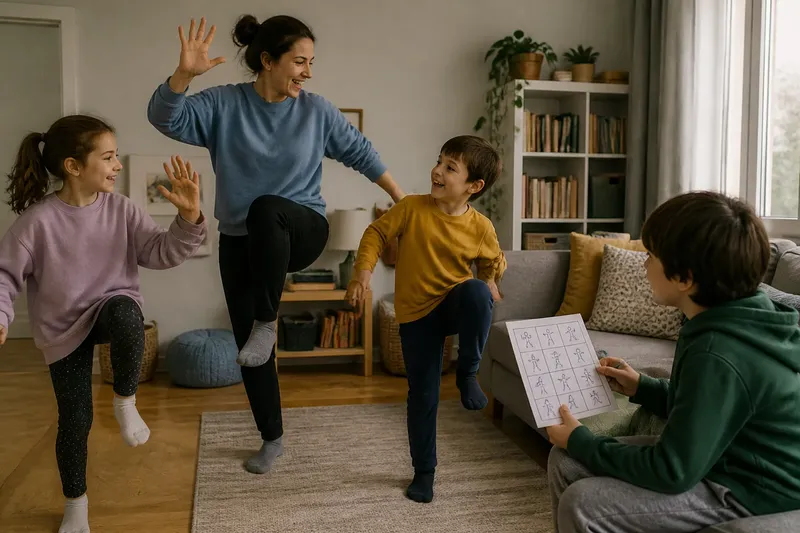
The common mistake with follow-the-leader or movement bingo is choosing the game before noticing who is in the room. A lively leader can leave a shy child watching from the sofa; a bingo card can feel like homework if everyone is already restless. Choosing for the group’s mood makes either game easier to join and more pleasant to repeat.
These low-preparation indoor games invite movement in different ways. Follow-the-leader builds participation around copying one person, while movement bingo gives each player a choice of small actions. A simple week-long rhythm can help you see which format suits your household without turning play into another obligation.
What does each game ask of the group?
In follow-the-leader, one person chooses a movement and everyone else copies it. The leader might march, reach overhead, tiptoe, or flap their arms like a bird. Players can take turns leading, or one person can guide the group for a short round.
Movement bingo uses a card with a different action in each square. Players complete an action and mark it off; a row, column, or simply trying several squares can be the goal. Make a card on scrap paper with prompts such as “reach for the ceiling,” “walk like a bear,” or “balance like a flamingo.” Let people choose standing or seated versions when that helps them join.
The difference is like choosing between a follow-the-cook dinner and a plate of small bites: one gives everyone the same next move, while the other offers choices. Neither format is automatically better. The useful question is whether your group wants a shared cue or room to choose.
Which format fits your household’s mood?
Follow-the-leader often suits a group that enjoys taking turns, making up characters, and responding together. It needs no card or writing, and a leader can adjust the movement as the mood changes. It may feel awkward, though, if one person is uncomfortable performing or if copying someone is less appealing than choosing independently.
Bingo can work well when people want to move at different paces or enjoy picking from a menu. A player can point to a square, ask someone else to read it, or pass on a prompt. The card also gives a quieter child an easy way to participate without inventing a move in front of everyone.
Say you have a child eager to be the star and a sibling who prefers not to be watched. Start with a bingo card and invite each person to select a square for the group; if the quieter sibling warms up, offer them the choice of leading one movement instead. The observable result to look for is whether both children keep joining, not whether they finish every square.
How can you try both games over a week?
Keep the routine light: choose a small moment that already exists, such as after school or before dinner, and offer one game rather than announcing a daily program. A brief round is enough to learn what the group enjoys. Use this simple sequence:
- First day: Offer follow-the-leader and let anyone who wants to lead choose one easy movement. Notice whether turn-taking feels fun or brings pressure.
- Next playtime: Try movement bingo with a few handwritten prompts. Invite players to choose squares rather than insisting on a particular order.
- Middle of the week: Repeat whichever game felt easier to join, but change who makes the choices. A child can call the moves, or a player can draw or point to the next bingo square.
- Later in the week: Offer the other game again, perhaps when the group’s energy differs. A calm afternoon and a bouncy pre-dinner moment may call for different formats.
- End of the week: Ask each person which prompt or role they would choose next time. Keep the answer simple: repeat a favorite, change an awkward prompt, or let the group pick between the games.
Treat this as a menu, not a streak to maintain. If nobody wants to play on a particular day, skip it. The point is to find a format that can fit into ordinary home life without requiring a special setup or a perfect mood.
How should you adapt the game for different players?
For follow-the-leader, give the group a choice of roles: lead, copy, suggest a move, or watch until ready. A leader can make a movement smaller, slower, or seated. Avoid making participation depend on doing a move in exactly the same way as someone else.
For bingo, use large, clear writing and familiar prompts. Mix energetic actions with gentle ones, and let players choose a square that feels comfortable. If reading is a barrier, read the card aloud or use simple drawings; the activity can still be chosen by the player.
Keep the game in a suitable part of the room and choose movements that match the available space. For any movement that could be affected by a health condition, disability, age, equipment, or household rules, adapt it to the person and seek qualified guidance where needed.
What do people often ask before choosing?
Is follow-the-leader easier to start?
Usually, it takes less preparation because someone can simply suggest a movement. The group still needs a way to make leadership comfortable, such as letting players pass or offer a move without demonstrating it.
Does movement bingo need a prize?
No prize is required; completing a few chosen prompts can be the whole point. If a full row feels competitive, invite everyone to pick squares together or stop when interest fades.
Can the games work for mixed ages?
They can, especially when players can choose their own version of a prompt. Keep the language familiar and let an older child suggest options without making them responsible for entertaining everyone.
Which game is better for a shy player?
Bingo may feel less exposing because a player can choose a square without becoming the center of attention. Follow-the-leader can also suit a shy player if watching, suggesting, or leading alongside another person counts as taking part.
How do you know which one to keep?
Pay attention to small signs: people offer ideas, ask for another round, or return to a favorite prompt. Also notice what makes someone withdraw, such as being put on the spot, waiting too long, or feeling that every square must be completed. Those clues help you adjust the format rather than blame the player.
For follow-the-leader or movement bingo, the best choice is the one your household can pick up again without a debate or elaborate preparation. Keep a few bingo prompts on a note by the table, or leave leadership open to whoever feels like suggesting a move. A familiar option, offered without pressure, can make shared movement easier to welcome into the day.