The All-or-Nothing Workout Trap at Home
The all-or-nothing workout trap can make home movement feel pointless. Learn to recognize everyday activity without turning it into a scorecard or chore.
The all-or-nothing workout trap at home starts when you decide that a walk to the kitchen or a stretch between tasks is too small to count. The cost is that ordinary movement becomes invisible, while exercise seems possible only when you can set aside a full session.
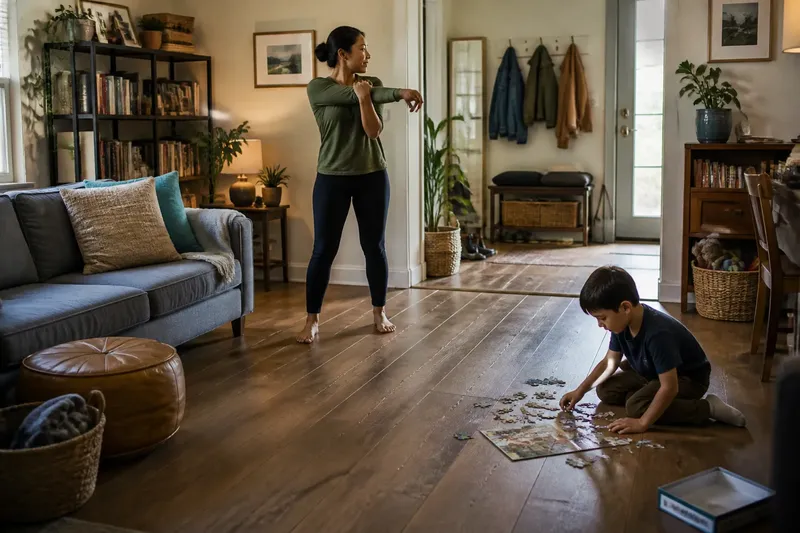
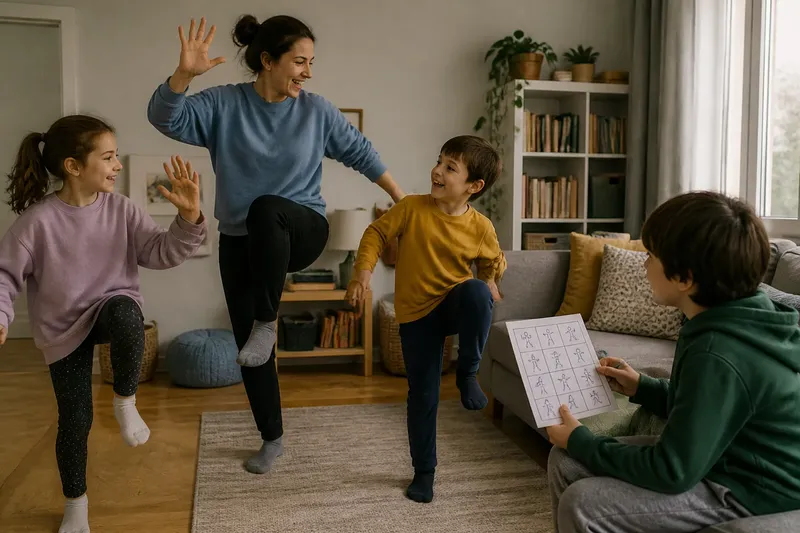
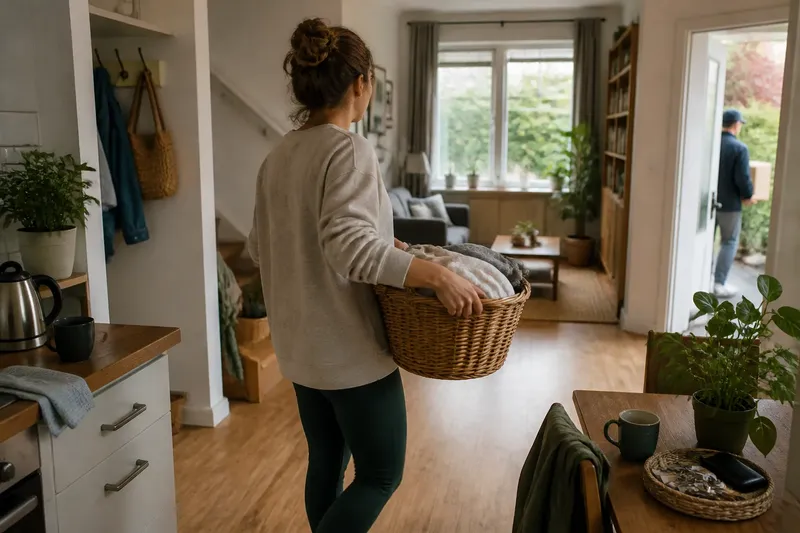
You can loosen that habit without adding a routine. Notice what your day already asks your body to do, then describe it plainly: you stood to water a plant, carried laundry, or walked to answer the door. That recognition is the point; it doesn’t need to become a target.
Why does everyday movement feel too small?
A planned workout has a clear beginning and end. Everyday movement is woven into other things, so it may not feel like exercise: you stand to reach a cupboard, take dishes to the sink, or walk across the room for a charger.
Those moments don’t have to compete with a workout. Think of them as different entries in the same day, not as a replacement for one another. A short walk across the house is like a bookmark: it marks a moment, but it doesn’t score the whole book.
Recognizing movement can be useful even when you don’t track it. You can notice what happened without deciding it was enough, too little, or something you must repeat.
What movement is already woven into your day?
Look at the transitions and tasks you already have. The aim is to describe them accurately, not make every chore harder or turn the house into a workout space.
- Observation: You walk between your desk and the kitchen. If that route is clear and comfortable, then simply notice the walk; otherwise, use the nearest clear route for the errand or stay where you are.
- Observation: A laundry basket is already beside the clothes you need to put away. If the load feels manageable, then carry it as part of the task; otherwise, make smaller trips or leave it for later.
- Observation: A houseplant needs water. If its watering can is easy to reach, then stand and water it; otherwise, move the can within comfortable reach or ask for help.
- Observation: A book is on a nearby shelf. If you can reach it comfortably, then get it when you want to read; otherwise, choose a closer book or reposition yourself.
- Observation: Your shoulders feel stiff after reading. If a gentle shoulder roll feels comfortable, then try it; otherwise, change position or leave the stretch aside.
- Observation: A delivery arrives at the door. If the route is clear, then walk over to answer it; otherwise, move only as far as is safe or ask someone nearby to help.
These are examples of noticing, not assignments. If an action feels uncomfortable or a task is awkward, there is no benefit in forcing it just to make the moment seem more active.
How can you notice movement without counting it?
Try a loose sequence: notice a transition, describe the movement, and return to what you were doing. There is no quota and no need to log the result.
- Notice the transition. You might be waiting for the kettle or standing after a video call. If nothing natural comes to mind, carry on with your day.
- Name what is already happening. Say to yourself, “I’m walking to the window,” or “I stood to put away a plate.” If the description starts sounding like a demand, drop it.
- Let the moment end naturally. Finish the errand or stop when you want to. If you feel discomfort, stop and choose a gentler option or none.
- Return to your task without a verdict. Make tea, answer your email, or resume the conversation. If you catch yourself grading the movement, stick to the plain description and move on.
Say you are waiting for a pot of water to boil and have been sitting at the kitchen table. You stand, walk to the living-room window, look outside, and return to the kitchen when you are ready. The observable result is that you changed position and walked through your home; no tally or claim about a workout is needed.
A basket by the stairs can make it easier to notice an item you were already planning to carry, much like a bowl by the door keeps keys in one place. If the basket starts collecting things you don’t need to move, clear it rather than inventing extra errands.
What should I know about brief movement?
Does a few minutes of movement count?
It counts as movement, even if it is not a complete workout. You can recognize it without deciding that it meets a target or needs to be repeated.
Should I track every short bout?
No tracking is required for this approach. If a tally makes movement feel like an obligation, leave it out and rely on simple awareness.
What if I already have a workout routine?
Keep a routine that suits you; everyday movement does not need to replace it. The two can simply occupy different parts of home life.
What if I forget to notice movement?
Nothing has gone wrong. You can notice another moment when it arises, or let the day pass without making up for anything.
How can you keep awareness from becoming a scorecard?
Use concrete, neutral language. “I carried the towels to the bedroom” describes an action; “I should have done more” turns it into a judgment. If you start comparing a small moment with a workout, return to what actually happened and leave it there.
Be cautious with reminders that sound like orders. A phone alert that says “stand up now” may feel like another task, especially if it keeps returning. If you use one, make it easy to dismiss; you can also skip reminders altogether.
Some days are full, tiring, or simply not suited to adding movement. That doesn’t erase what you noticed on another day. The useful shift is to stop treating planned exercise as the only movement worth recognizing.
The all-or-nothing workout trap at home eases when a small bout can stay small. Notice a comfortable action that is already part of your day, describe it without grading it, and let that be enough for the moment. If you have a health concern, a recent injury, or uncertainty about suitable activity, ask a qualified health professional for guidance.